
HIGHLIGHTS OF PRESCRIBING INFORMATION
These highlights do not include all the information needed to use LuciRip safely and effectively. See full prescribing information for LuciRip.
INDICATIONS AND USAGE
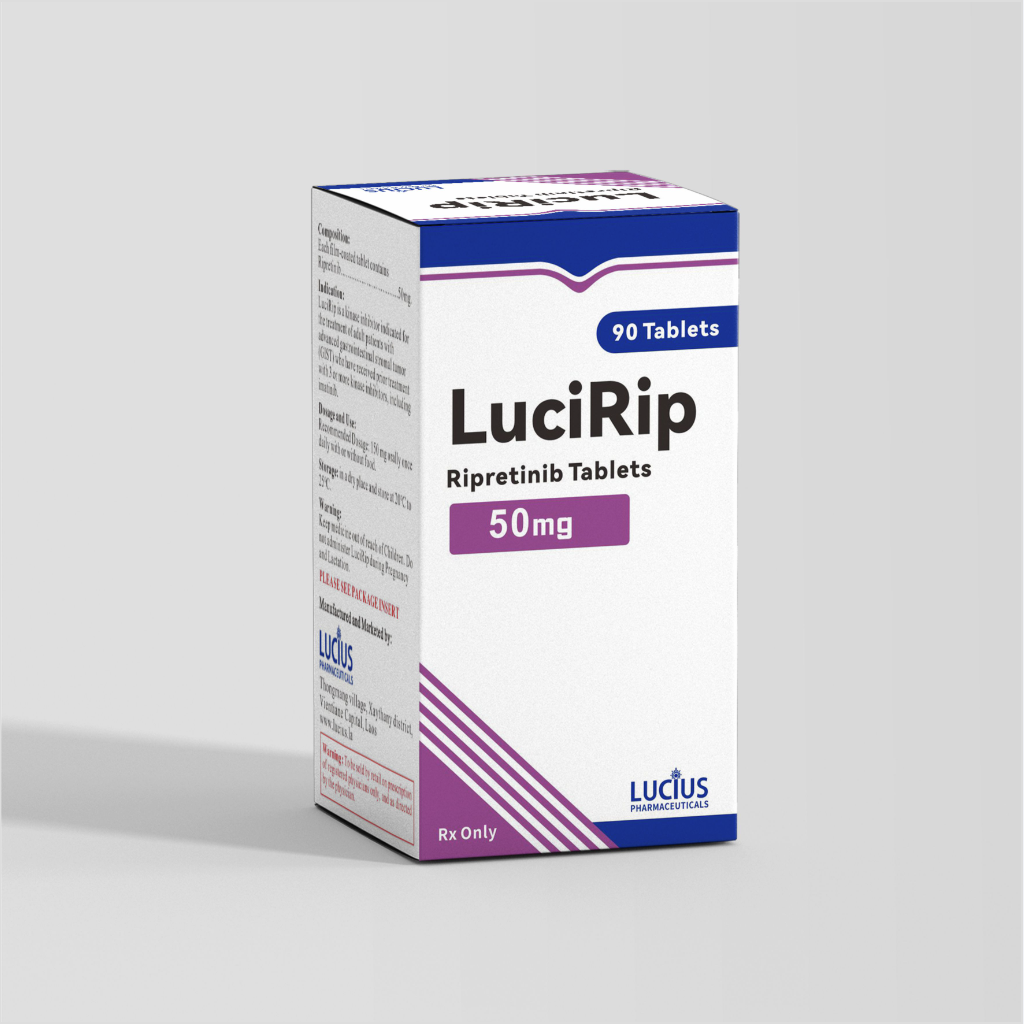
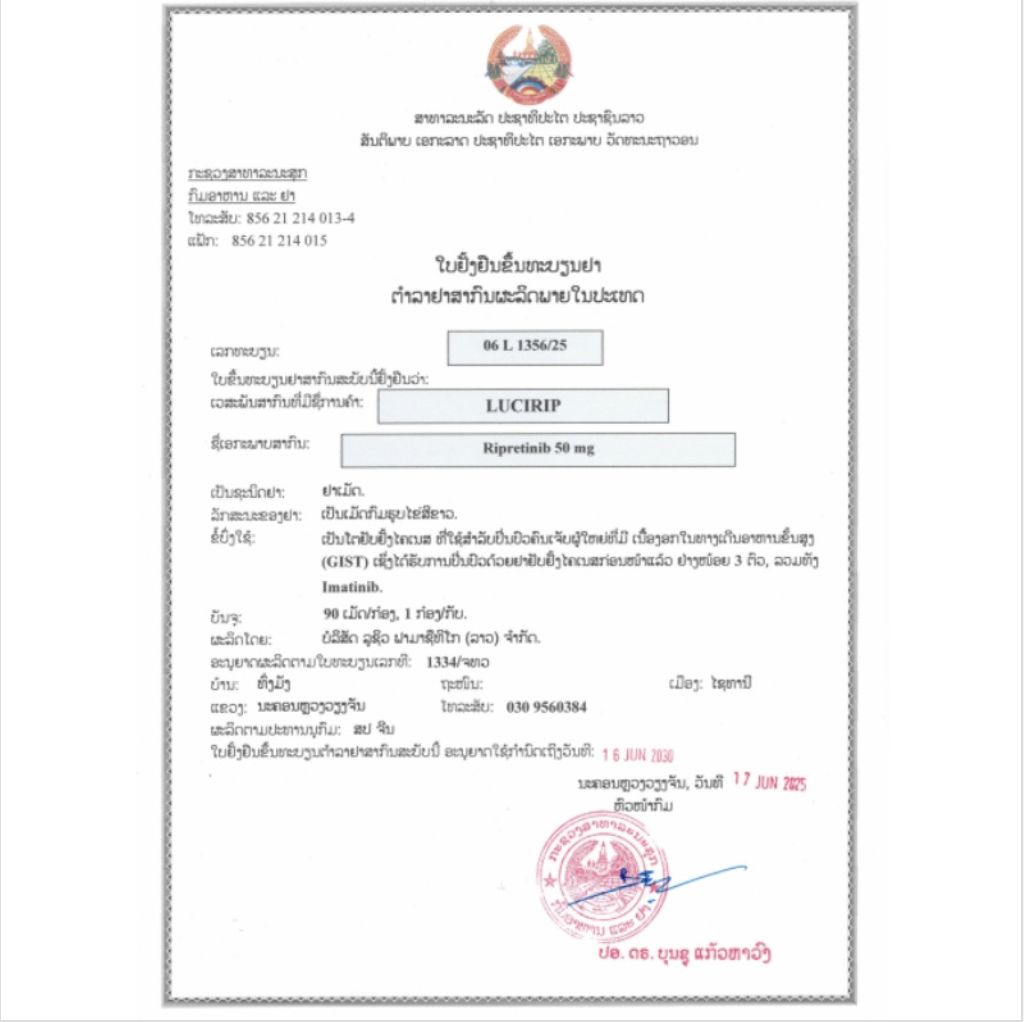
LuciRip is a kinase inhibitor indicated for the treatment of adult patients with advanced gastrointestinal stromal tumor (GIST) who have received prior treatment with 3 or more kinase inhibitors, including imatinib.
DOSAGE AND ADMINISTRATION
Recommended Dosage: 150 mg orally once daily with or without food.
DOSAGE FORMS AND STRENGTHS
Tablets: 50 mg×90 tablets
CONTRAINDICATIONS
None.
WARNINGS AND PRECAUTIONS
· Palmar-Plantar Erythrodysesthesia Syndrome: Based on severity, withhold LuciRip and resume at same or reduced dose.
· New Primary Cutaneous Malignancies: Perform dermatologic evaluations when initiating LuciRip and routinely during treatment.
· Hypertension: Do not initiate LuciRip in patients with uncontrolled hypertension and monitor blood pressure during treatment. Based on severity, withhold LuciRip and then resume at same or reduced dose or permanently discontinue.
· Cardiac Dysfunction: Assess ejection fraction by echocardiogram or MUGA scan prior to initiating LuciRip and during treatment, as clinically indicated. Permanently discontinue LuciRip for Grade 3 or 4 left ventricular systolic dysfunction.
· Risk of Impaired Wound Healing: Withhold LuciRip for at least 1 week prior to elective surgery. Do not administer for at least 2 weeks after major surgery and until adequate wound healing. The safety of resumption of LuciRip after resolution of wound healing complications has not been established.
· Photosensitivity: May cause photosensitivity reactions. Advise patients to limit direct ultraviolet exposure.
· Embryo-Fetal Toxicity: Can cause fetal harm. Advise females of reproductive potential of the potential risk to a fetus and to use effective contraception.
ADVERSE REACTIONS
The most common adverse reactions (≥20%) were alopecia, fatigue, nausea, abdominal pain, constipation, myalgia, diarrhea, decreased appetite, palmarplantar erythrodysesthesia, and vomiting. The most common Grade 3 or 4 laboratory abnormalities (≥4%) were increased lipase and decreased phosphate.
DRUG INTERACTIONS
· Strong CYP3A Inhibitors: Monitor more frequently for adverse reactions.
· Strong CYP3A Inducers: Avoid concomitant use of strong CYP3A inducers.
· Moderate CYP3A Inducers: Avoid concomitant use of moderate CYP3A inducers. If a moderate CYP inducer cannot be avoided, increase ripretinib dose frequency to twice daily.
USE IN SPECIFIC POPULATIONS
Lactation: Advise not to breastfeed.
Storage
Store at 20℃ to 25℃ (68℉ to 77℉), excursions permitted between 15℃ and 30℃ (59℉ and 86℉) [see USP Controlled Room Temperature]. Protect from moisture.