

1 INDICATIONS AND USAGE
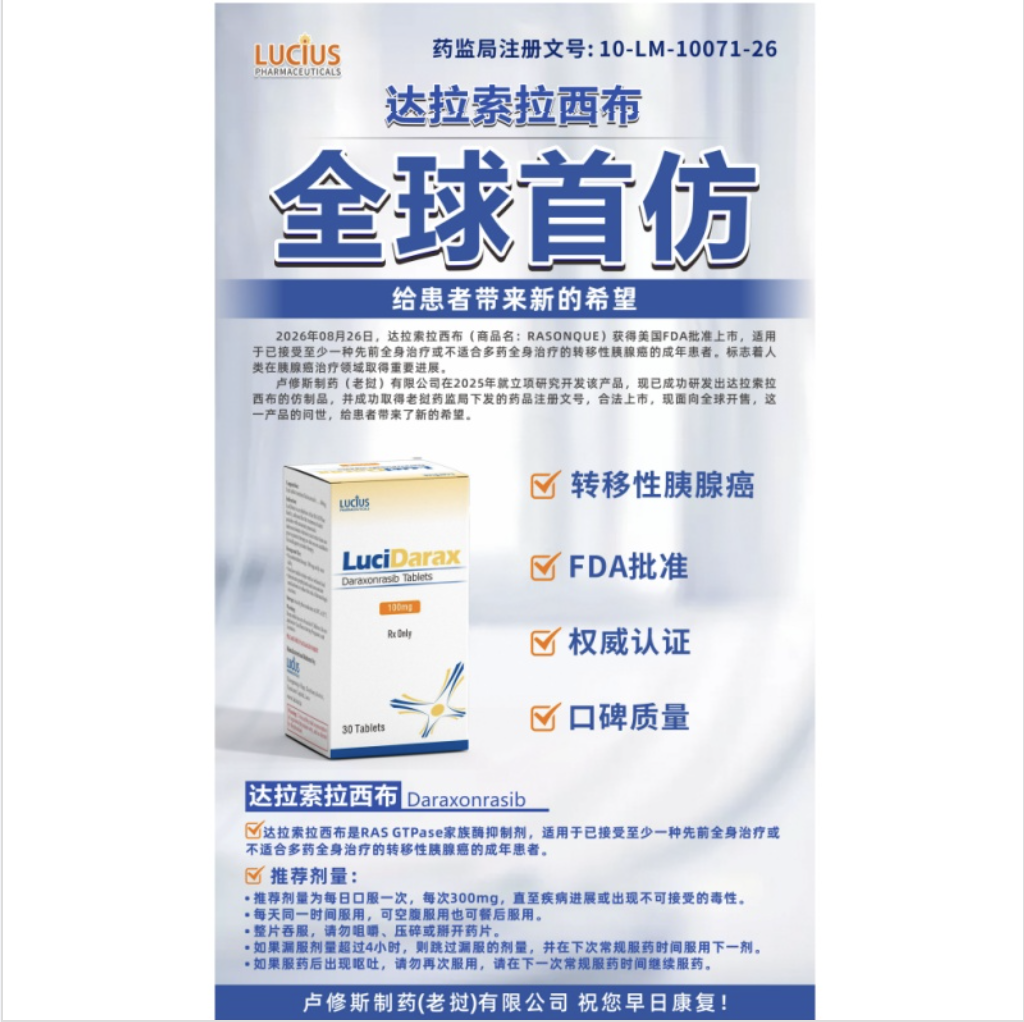
RASONQUE is indicated for the treatment of adult patients with metastatic pancreatic adenocarcinoma who have received at least one prior systemic therapy or who are not candidates for multiagent systemic therapy.Revolution...
2 DOSAGE AND ADMINISTRATION
Recommended Dosage
The recommended dose is 300 mg orally once daily, taken at approximately the same time each day.
- Take with or without food.
- Swallow tablets whole. Do not crush, chew, or split tablets.
- If a dose is missed, skip the missed dose and take the next dose at the regularly scheduled time. Do not take an extra dose to make up for a missed dose.
- If vomiting occurs after dosing, do not re-dose; resume at next scheduled time.
Dose Modifications
Dose reduction steps:
- First reduction: 225 mg once daily
- Second reduction: 150 mg once daily
- Discontinue permanently if unable to tolerate 150 mg once daily.
Dose modifications apply for dermatologic/soft tissue toxicity, stomatitis, hepatotoxicity, and other grade ≥2 adverse reactions.
3 DOSAGE FORMS AND STRENGTHS
Film-coated tablets:
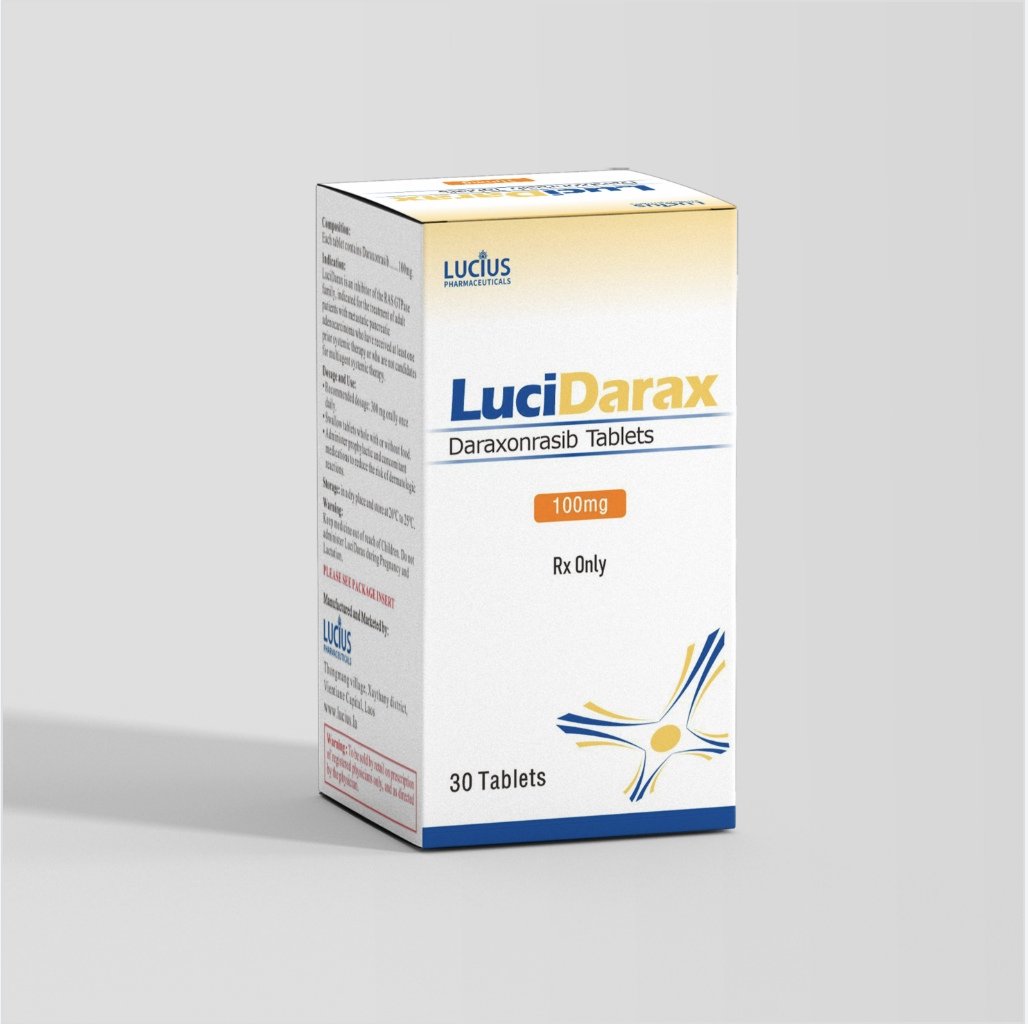
- 100 mg daraxonrasib
- 150 mg daraxonrasib Blue, oval, biconvex, unscored tablets.Revolution...
4 CONTRAINDICATIONS
None.
5 WARNINGS AND PRECAUTIONS
5.1 Dermatologic and Soft Tissue Toxicity
Severe skin and soft tissue adverse reactions including exfoliative dermatitis, bullous lesions, skin ulceration, and cellulitis may occur.
- Monitor patients for rash, blisters, skin erosion, swelling or pain.
- For Grade 2 toxicity: interrupt dosing until recovery, then reduce dose.
- For Grade 3 or 4 toxicity: interrupt or permanently discontinue RASONQUE.
5.2 Stomatitis
Stomatitis, oral mucosal ulceration, and oral pain can occur.
- Advise patients to practice good oral hygiene.
- Manage with supportive care, dose interruption or reduction based on severity.
5.3 Hepatotoxicity
Elevations in liver transaminases (ALT/AST) may occur.
- Monitor liver function tests at baseline and periodically during treatment.
- Hold, reduce dose, or discontinue based on magnitude and persistence of liver enzyme elevation.
5.4 Embryo-Fetal Toxicity
RASONQUE can cause fetal harm.
- Advise females of reproductive potential of the risk to fetus; use effective contraception during treatment and for 1 week after last dose.
- Advise male patients with female partners of reproductive potential to use effective contraception during treatment and for 1 week after last dose.
6 ADVERSE REACTIONS
Most common adverse reactions (≥20%): Rash, stomatitis, fatigue, diarrhea, nausea, dry skin, decreased appetite, vomiting, pruritus, peripheral edema, alopecia.
Most common laboratory abnormalities (≥20%): Increased ALT, increased AST, decreased hemoglobin, increased lipase, decreased lymphocytes.
7 DRUG INTERACTIONS
Daraxonrasib is primarily metabolized by CYP3A; it is also a substrate of P-gp.Medscape R...
Strong CYP3A Inhibitors
Avoid co-administration. Strong CYP3A inhibitors significantly increase daraxonrasib exposure.
Example: itraconazole, ketoconazole, clarithromycin.
Moderate CYP3A Inhibitors
Avoid if possible. If co-administration is unavoidable, monitor closely for adverse reactions and dose reduction may be needed.
Example: verapamil, fluconazole.
Strong or Moderate CYP3A Inducers
Avoid co-administration. Inducers decrease daraxonrasib exposure, which may reduce efficacy.
Example: rifampin, carbamazepine, phenytoin.
P-gp Inhibitors
May increase daraxonrasib concentration; monitor for toxicity.
8 USE IN SPECIFIC POPULATIONS
Pregnancy
Based on animal data and its mechanism of action, RASONQUE may cause fetal harm. There are no adequate human data.
Lactation
Advise women not to breastfeed during treatment and for 1 week after the last dose.
Females and Males of Reproductive Potential
Pregnancy testing recommended prior to starting treatment. Contraception requirement as above.
Pediatric Use
Safety and effectiveness not established in pediatric patients.
Geriatric Use
No overall differences in safety or efficacy observed in patients ≥65 years old.
Hepatic Impairment
Mild hepatic impairment: no dose adjustment. Moderate/severe hepatic impairment has not been studied.
Renal Impairment
Mild, moderate, severe renal impairment or ESRD: no dose adjustment required.
11 DESCRIPTION
RASONQUE (daraxonrasib) is an oral, noncovalent tri-complex RAS(ON) multi-selective inhibitor. Tablet inactive ingredients: Tablet core: butylated hydroxytoluene, colloidal silicon dioxide, croscarmellose sodium, hydroxypropyl cellulose, HPMCAS, magnesium stearate, mannitol, microcrystalline cellulose. Film coat: FD&C blue #2 aluminum lake, glyceryl mono and dicaprylocaprate, polyvinyl alcohol, sodium lauryl sulfate, talc, titanium dioxide.Revolution...
12 CLINICAL PHARMACOLOGY
12.1 Mechanism of Action
Daraxonrasib binds cyclophilin A to form a binary complex; this complex binds to active GTP-bound RAS (KRAS, NRAS, HRAS, wild-type and mutant), forming a tri-complex. This blocks RAS interaction with downstream effector proteins, suppresses RAS signaling, and inhibits proliferation of RAS-driven tumor cells.Medscape R...
12.2 Pharmacokinetics
- Tmax: median 2.2 h (0.67–8 h)
- Plasma protein binding: ~98%, concentration-independent
- Half-life: 9.2 ±2.7 hours
- Metabolism: mainly CYP3A
- Excretion: ~93% in feces (51% unchanged); ~1% in urine (1% unchanged)
- Food effect: high-fat meal has no clinically meaningful PK change.Medscape R...
13 NONCLINICAL TOXICOLOGY
Carcinogenesis, Mutagenesis, Impairment of Fertility
No long-term carcinogenicity studies. Daraxonrasib was not genotoxic in standard assays. Animal fertility studies show adverse effects on reproductive organs at exposures similar to clinical exposure.
14 CLINICAL STUDIES
Approval was based on the RASolute 302 trial, an open-label, multicenter study in adults with metastatic pancreatic adenocarcinoma who had received prior systemic therapy.
16 HOW SUPPLIED
RASONQUE tablets are supplied in bottles.
- 100 mg: blue oval tablet, imprint “100M;R”
- 150 mg: blue oval tablet, imprint “150M;R”
17 PATIENT COUNSELING INFORMATION
- Advise patients to take once daily, swallow whole.
- Warn about skin rash, blisters, mouth sores; promptly report.
- Counsel on pregnancy risk and contraception.
- Tell patients to report liver-related symptoms: jaundice, fatigue, dark urine, abdominal pain.