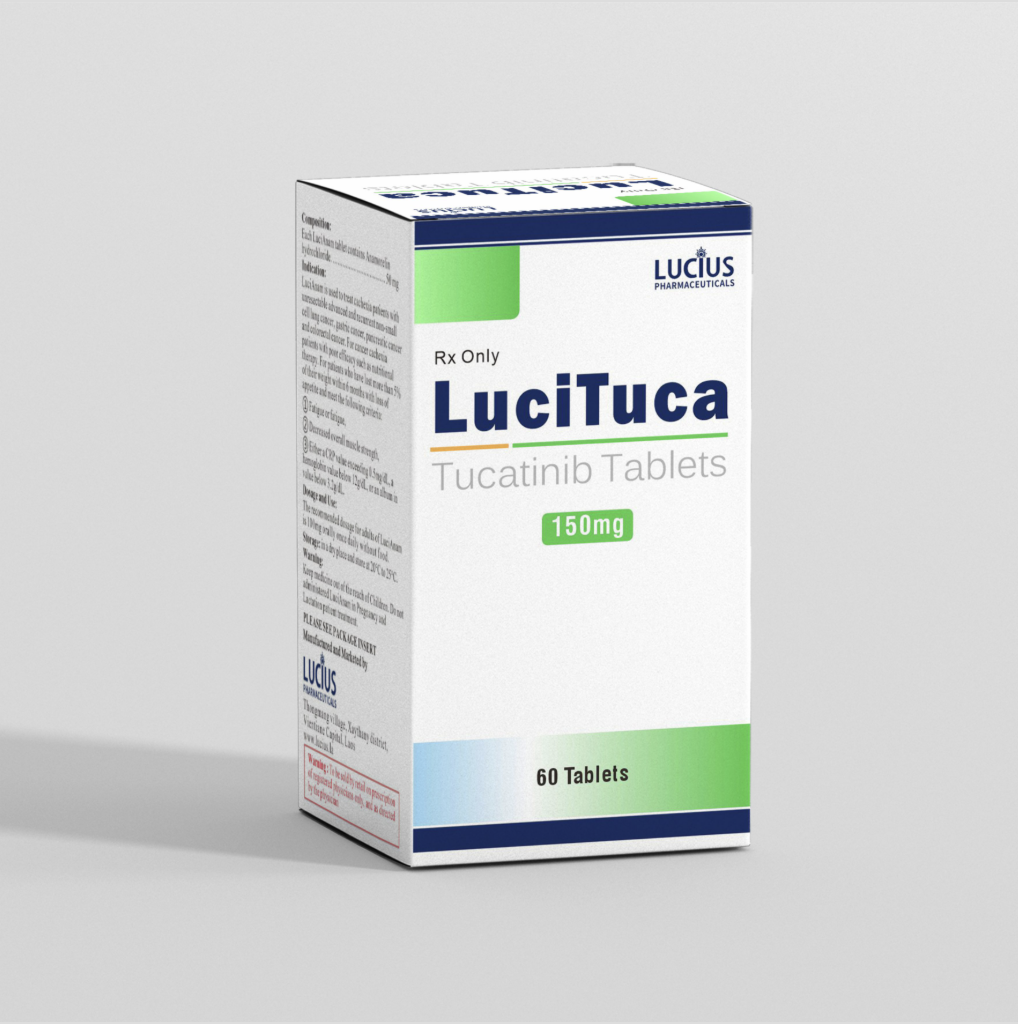
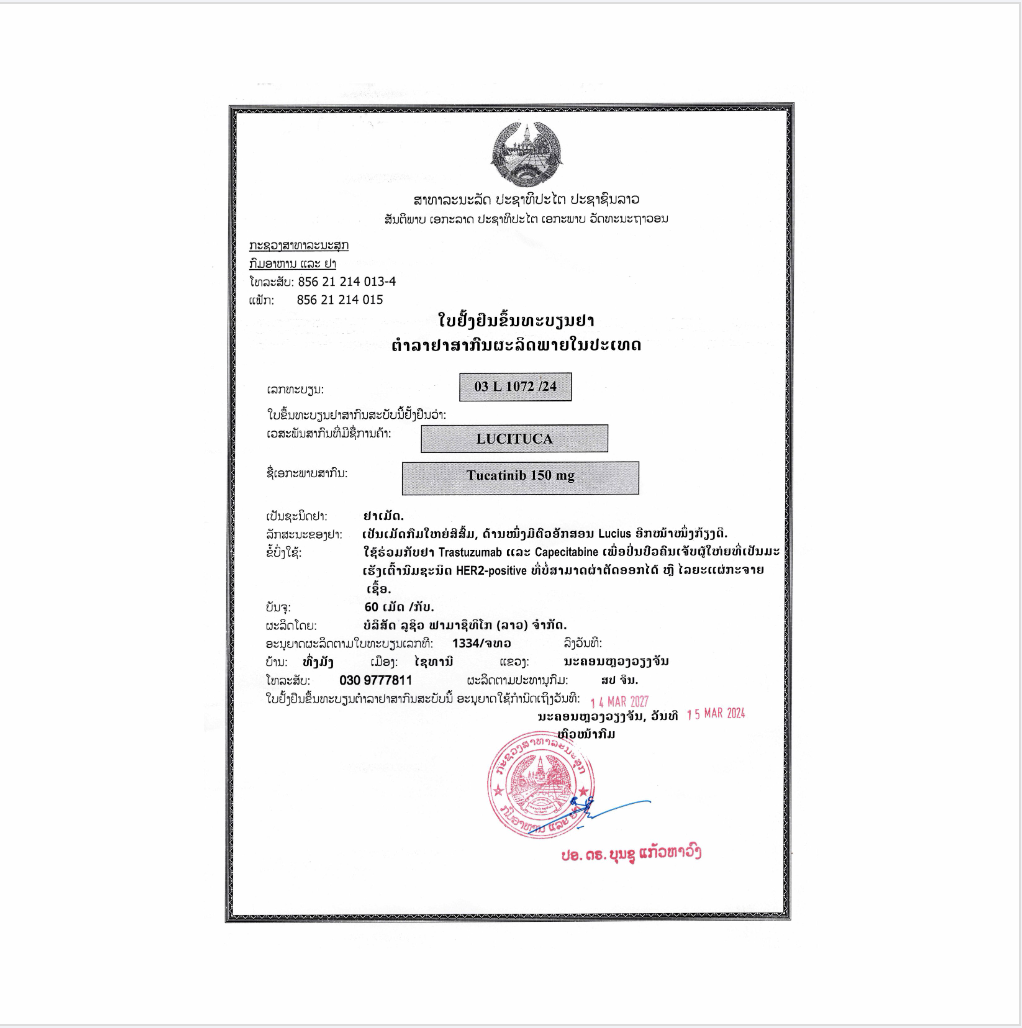

HIGHLIGHTS OF PRESCRIBING INFORMATION
These highlights do not include all the information needed to use LuciTuca safely and effectively. See full prescribing information for LuciTuca.
INDICATIONS AND USAGE
TUKYSA is a kinase inhibitor indicated:
• in combination with trastuzumab and capecitabine for treatment of adult patients with advanced unresectable or metastatic HER2-positive breast cancer, including patients with brain metastases, who have received one or more prior anti-HER2-based regimens in the metastatic setting.
• in combination with trastuzumab for the treatment of adult patients with RAS wild-type HER2-positive unresectable or metastatic colorectal cancer that has progressed following treatment with fluoropyrimidine-, oxaliplatin-, and irinotecan-based chemotherapy.
DOSAGE AND ADMINISTRATION
• In patients with unresectable or metastatic colorectal cancer, confirm the presence of HER2 protein overexpression and RAS wild-type in tumor specimens prior to the initiation of TUKYSA.
• Recommended dosage: 300 mg taken orally twice daily with or without food.
• For patients with severe hepatic impairment, the recommended dosage is 200 mg orally twice daily.
DOSAGE FORMS AND STRENGTHS
Tablets: 150 mg×60 tablets
CONTRAINDICATIONS
None.
WARNINGS AND PRECAUTIONS
• Diarrhea: Severe diarrhea, including dehydration, acute kidney injury, and death, has been reported. Administer antidiarrheal treatment as clinically indicated. Interrupt dose, then dose reduce, or permanently discontinue TUKYSA based on severity.
• Hepatotoxicity: Severe hepatotoxicity has been reported on TUKYSA. Monitor ALT, AST and bilirubin prior to starting TUKYSA, every 3 weeks during treatment and as clinically indicated. Interrupt dose, then dose reduce, or permanently discontinue TUKYSA based on severity.
• Embryo-Fetal Toxicity: TUKYSA can cause fetal harm. Advise patients of potential risk to a fetus and to use effective contraception.
Also, refer to the Full Prescribing Information of trastuzumab and capecitabine for pregnancy and contraception information.
ADVERSE REACTIONS
• The most common adverse reactions (≥20%) with TUKYSA in combination with trastuzumab and capecitabine in patients with metastatic breast cancer are diarrhea, palmar-plantar erythrodysesthesia, nausea, hepatotoxicity, vomiting, stomatitis, decreased appetite, anemia, and rash.
• The most common adverse reactions (≥20%) with TUKYSA in combination with trastuzumab in patients with unresectable or metastatic colorectal cancer are diarrhea, fatigue, rash, nausea, abdominal pain, infusion related reactions, and pyrexia.
DRUG INTERACTIONS
• Strong CYP3A Inducers or Moderate CYP2C8 Inducers: Avoid concomitant use.
• Strong CYP2C8 Inhibitors: Avoid concomitant use; reduce TUKYSA dose if concomitant use cannot be avoided.
• CYP3A Substrates: Avoid concomitant use with CYP3A substrates, where minimal concentration changes may lead to serious or life-threatening toxicities.
• P-gp Substrates: Consider reducing the dose of P-gp substrates, where minimal concentration changes may lead to serious or life-threatening toxicities.
USE IN SPECIFIC POPULATIONS
Lactation: Advise not to breastfeed.
Storage
Store at 20℃ to 25℃ (68℉ to 77℉), excursions permitted between 15℃ and 30℃ (59℉ and 86℉) [see USP Controlled Room Temperature]. Protect from moisture.