
HIGHLIGHTS OF PRESCRIBING INFORMATION
These highlights do not include all the information needed to use LuciVibe safely and effectively. See full prescribing information for LuciVibe.
INDICATIONS AND USAGE
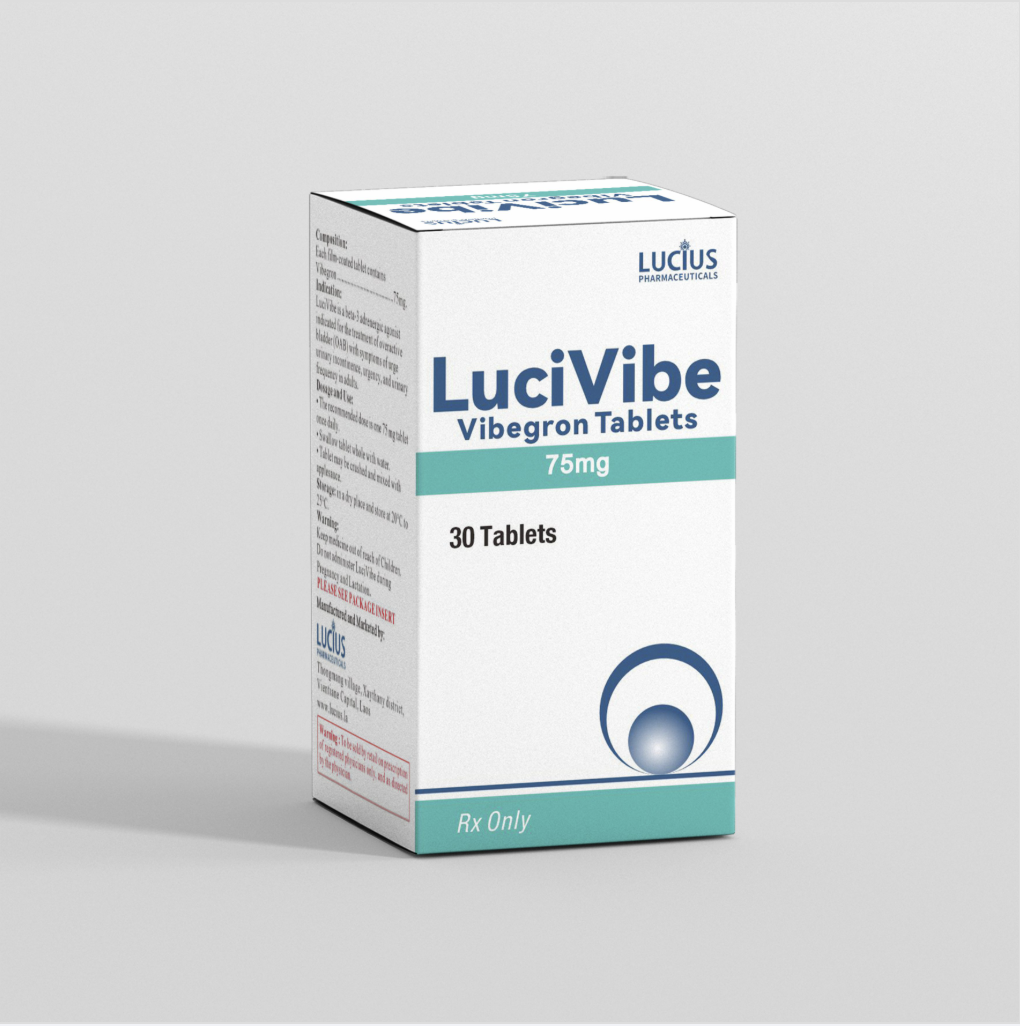
LuciVibe is a beta-3 adrenergic agonist indicated for the treatment of overactive bladder (OAB) with symptoms of urge urinary incontinence, urgency, and urinary frequency in adults.
DOSAGE AND ADMINISTRATION
• The recommended dose is one 75 mg tablet once daily.
• Swallow tablet whole with water.
• Tablet may be crushed and mixed with applesauce.
DOSAGE FORMS AND STRENGTHS
Tablets: 75 mg×30 tablets
CONTRAINDICATIONS
Do not use if prior hypersensitivity reaction to vibegron or any components of the product.
WARNINGS AND PRECAUTIONS
Urinary Retention: Monitor for urinary retention, especially in patients with bladder outlet obstruction and also in patients taking muscarinic antagonist medications for OAB, in whom the risk of urinary retention may be greater. If urinary retention develops, discontinue LuciVibe.
ADVERSE REACTIONS
Most common adverse reactions (≥2%) reported with LuciVibe were headache, urinary tract infection, nasopharyngitis, diarrhea, nausea, and upper respiratory tract infection.
DRUG INTERACTIONS
Digoxin: Measure serum digoxin concentrations before initiating LuciVibe.
Monitor serum digoxin concentrations to titrate digoxin dose to desired clinical effect.
USE IN SPECIFIC POPULATIONS
Pediatric use: Safety and effectiveness in pediatric patients have not been established.
End-stage Renal Disease with or without Hemodialysis: Not recommended.
Severe Hepatic Impairment: Not recommended.
Storage
Store at 20°C to 25°C (68°F to 77°F), excursions permitted between 15°C and 30°C (59°F and 86°F) [see USP Controlled Room Temperature]. Protect from moisture.