
HIGHLIGHTS OF PRESCRIBING INFORMATION
These highlights do not include all the information needed to use LuciVemu safely and effectively. See full prescribing information for LuciVemu.
INDICATIONS AND USAGE
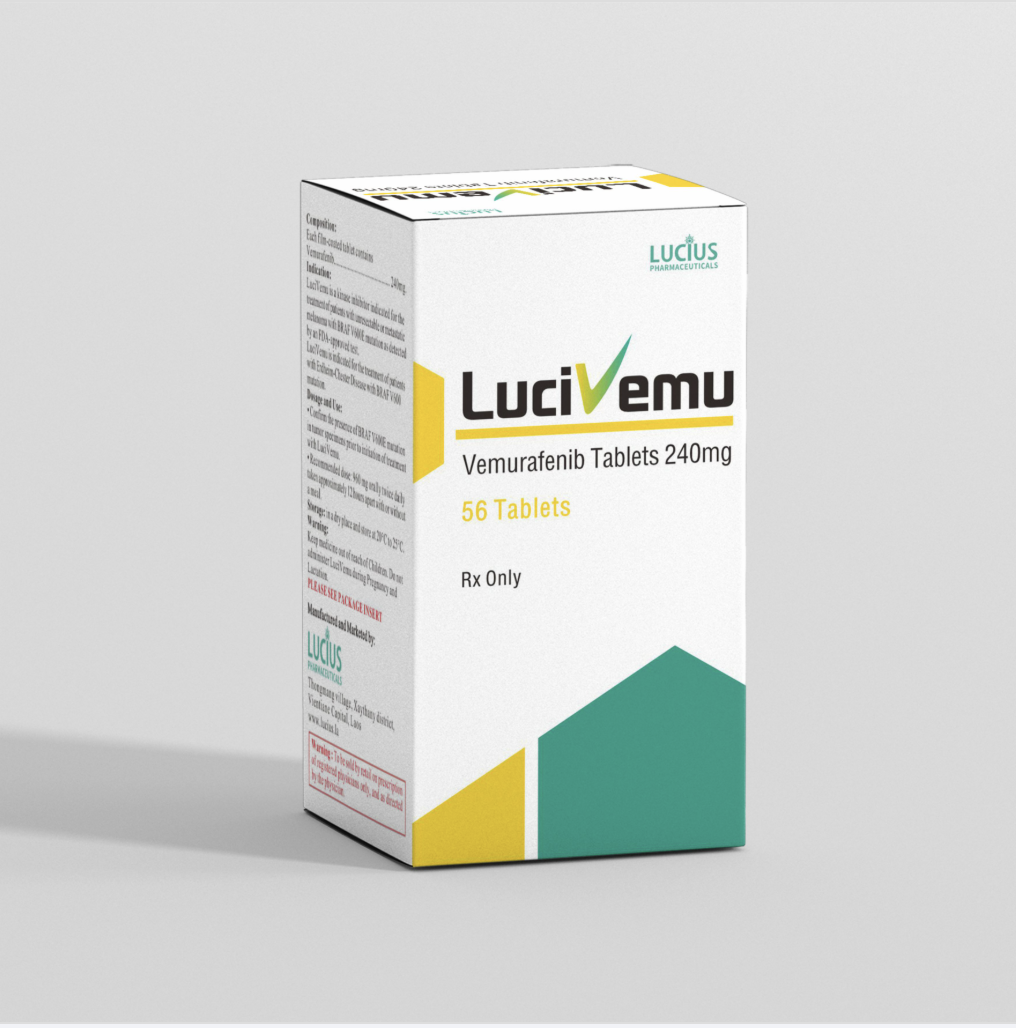
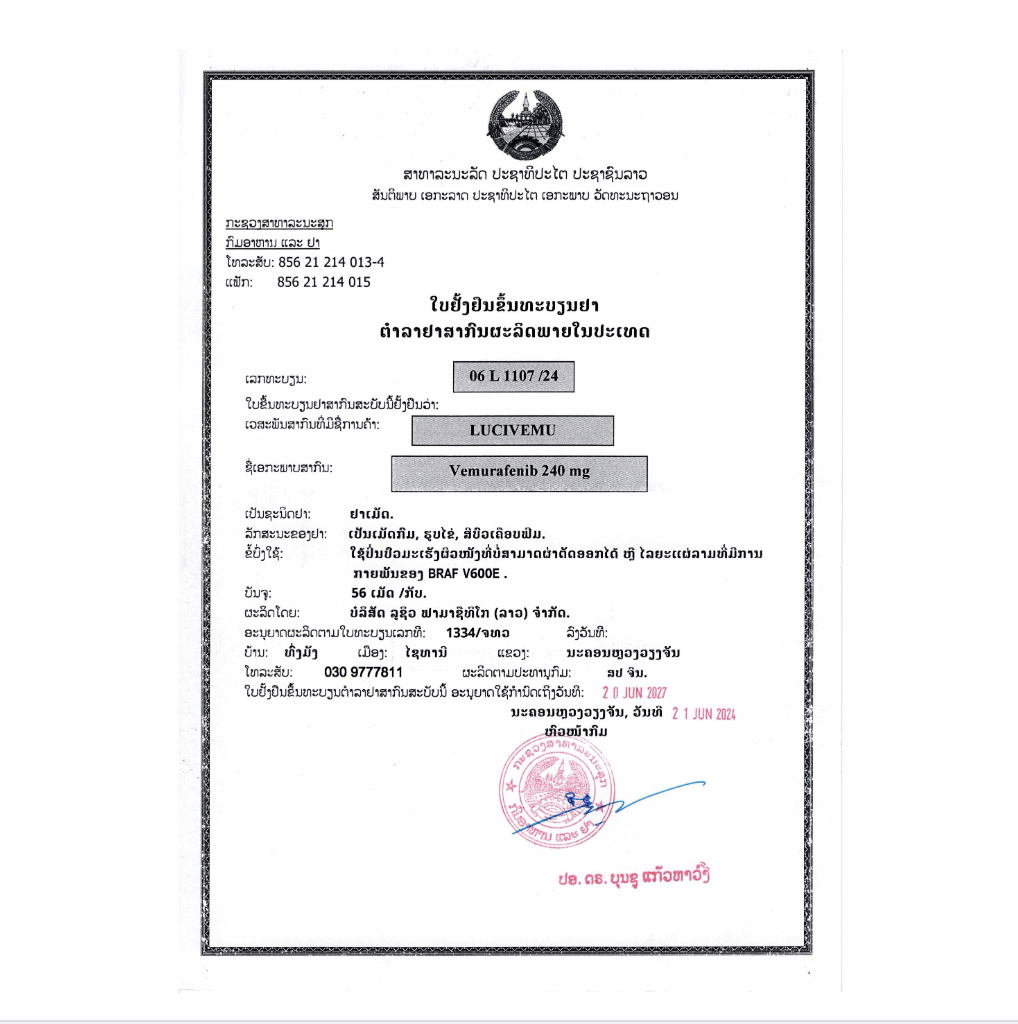
LuciVemu is a kinase inhibitor indicated for the treatment of patients with unresectable or metastatic melanoma with BRAF V600E mutation as detected by an FDA-approved test. LuciVemu is indicated for the treatment of patients with ErdheimChester Disease with BRAF V600 mutation.
Limitation of Use: LuciVemu is not indicated for treatment of patients with wild-type BRAF melanoma.
DOSAGE AND ADMINISTRATION
· Confirm the presence of BRAF V600E mutation in tumor specimens prior to initiation of treatment with LuciVemu.
· Recommended dose: 960 mg orally twice daily taken approximately 12 hours apart with or without a meal.
DOSAGE FORMS AND STRENGTHS
Tablets: 240 mg×56 tablets
CONTRAINDICATIONS
None
WARNINGS AND PRECAUTIONS
· New Primary Cutaneous Malignancies: Perform dermatologic evaluations prior to initiation of therapy, every 2 months while on therapy, and for up to 6 months following discontinuation of LuciVemu. Manage with excision and continue treatment without dose adjustment.
· New Non-Cutaneous Squamous Cell Carcinoma: Evaluate for symptoms or clinical signs of new non-cutaneous SCC before initiation of treatment and periodically during treatment.
· Other Malignancies: Monitor patients receiving LuciVemu closely for signs or symptoms of other malignancies.
· Tumor Promotion in BRAF Wild-Type Melanoma: Increased cell proliferation can occur with BRAF inhibitors.
· Serious Hypersensitivity Reactions including anaphylaxis and Drug Reaction with Eosinophilia and Systemic Symptoms (DRESS Syndrome): Discontinue LuciVemu for severe hypersensitivity reactions.
· Severe Dermatologic Reactions, including Stevens-Johnson Syndrome and Toxic Epidermal Necrolysis: Discontinue LuciVemu for severe dermatologic reactions.
· QT Prolongation: Monitor ECG and electrolytes before and during treatment. Withhold LuciVemu for QTc of 500 ms or greater. Correct electrolyte abnormalities and control for cardiac risk factors for QT prolongation.
· Hepatotoxicity: Measure liver enzymes and bilirubin before initiating LuciVemu and monitor monthly during treatment.
· Photosensitivity: Advise patients to avoid sun exposure.
· Serious Ophthalmologic Reactions: Monitor for signs and symptoms of uveitis.
· Embryo-Fetal Toxicity: Can cause fetal harm. Advise females of the potential risk to the fetus and to use effective contraception.
· Radiation Sensitization and Radiation Recall: Severe cases have been reported.
· Renal Failure: Measure serum creatinine before initiating LuciVemu and monitor periodically during treatment.
· Dupuytren’s Contracture and plantar fascial fibromatosis: Events should be managed with dose reduction, treatment interruption, or treatment discontinuation.
ADVERSE REACTIONS
Melanoma: Most common adverse reactions (≥ 30%) are arthralgia, rash,alopecia, fatigue, photosensitivity reaction, nausea, pruritus, and skin papilloma.
Erdheim-Chester Disease: Most common adverse reactions (>50%) are arthralgia, rash maculo-papular, alopecia, fatigue, electrocardiogram QT interval prolonged, and skin papilloma.
DRUG INTERACTIONS
Avoid concomitant administration of LuciVemu with strong CYP3A4 inhibitors or inducers.
CYP1A2 Substrates: LuciVemu can increase concentrations of CYP1A2 substrates. Avoid concomitant use of LuciVemu with CYP1A2 substrates with a narrow therapeutic window. If coadministration cannot be avoided, monitor closely for toxicities and consider dose reduction of CYP1A2 substrates.
USE IN SPECIFIC POPULATIONS
Lactation: Do not breastfeed while taking LuciVemu.
Storage
Store at 20°C to 25°C (68°F to 77°F), excursions permitted between 15°C and 30°C (59°F and 86°F) [see USP Controlled Room Temperature]. Protect from moisture.