
HIGHLIGHTS OF PRESCRIBING INFORMATION
These highlights do not include all the information needed to use LuciSuni safely and effectively. See full prescribing information for LuciSuni.
INDICATIONS AND USAGE
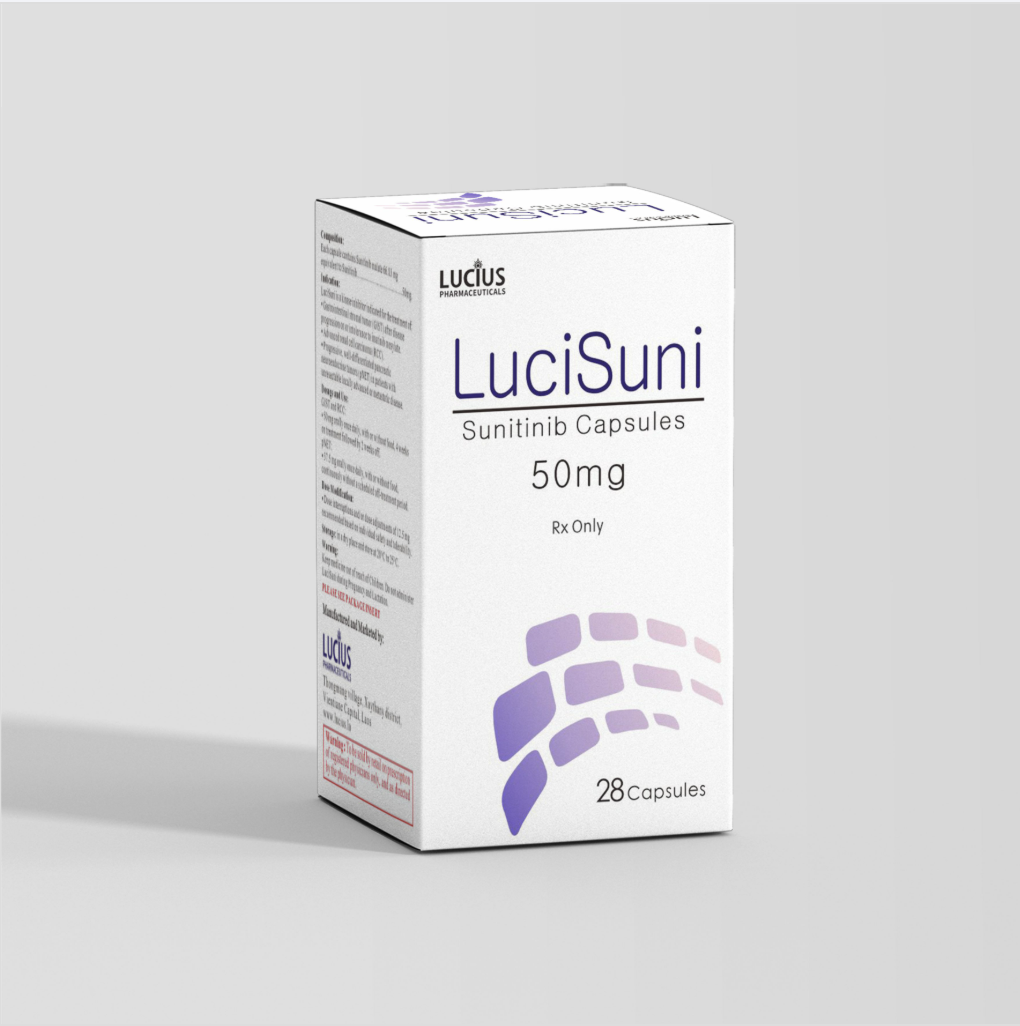
LuciSuni is a kinase inhibitor indicated for the treatment of:
• Gastrointestinal stromal tumor (GIST) after disease progression on or intolerance to imatinib mesylate.
• Advanced renal cell carcinoma (RCC).
• Progressive, well-differentiated pancreatic neuroendocrine tumors (pNET) in patients with unresectable locally advanced or metastatic disease.
DOSAGE AND ADMINISTRATION
GIST and RCC:
• 50 mg orally once daily, with or without food, 4 weeks on treatment followed by 2 weeks off.
pNET:
• 37.5 mg orally once daily, with or without food, continuously without a scheduled off-treatment period.
Dose Modification:
• Dose interruptions and/or dose adjustments of 12.5 mg recommended based on individual safety and tolerability.
DOSAGE FORMS AND STRENGTHS
Capsules: 50mg×28 capsules
CONTRAINDICATIONS
None.
WARNINGS AND PRECAUTIONS
• Hepatotoxicity, including liver failure, has been observed. Monitor liver function tests before initiation of treatment, during each cycle of treatment, and as clinically indicated. LuciSuni should be interrupted for Grade 3 or 4 drug-related hepatic adverse events and discontinued if there is no resolution. Do not restart LuciSuni if patients subsequently experience severe changes in liver function tests or have other signs and symptoms of liver failure.
• Women of childbearing potential should be advised of the potential hazard to the fetus and to avoid becoming pregnant.
• Cardiac toxicity including left ventricular ejection fraction declines to below the lower limit of normal and cardiac failure including death have occurred. Monitor patients for signs and symptoms of congestive heart failure.
• Prolonged QT intervals and Torsade de Pointes have been observed. Use with caution in patients at higher risk for developing QT interval prolongation. When using LuciSuni, monitoring with on-treatment electrocardiograms and electrolytes should be considered.
• Hypertension may occur. Monitor blood pressure and treat as needed.
• Hemorrhagic events including tumor-related hemorrhage have occurred. Perform serial complete blood counts and physical examinations.
•Thyroid dysfunction may occur. Patients with signs and/or symptoms suggestive of hypothyroidism or hyperthyroidism should have laboratory monitoring of thyroid function performed and be treated as per standard medical practice.
• Temporary interruption of therapy with LuciSuni is recommended in patients undergoing major surgical procedures.
• Adrenal hemorrhage was observed in animal studies. Monitor adrenal function in case of stress such as surgery, trauma or severe infection.
ADVERSE REACTIONS
• The most common adverse reactions (≥20%) are fatigue, asthenia, fever, diarrhea, nausea, mucositis/stomatitis, vomiting, dyspepsia, abdominal pain, constipation, hypertension, peripheral edema, rash, hand-foot syndrome, skin discoloration, dry skin, hair color changes, altered taste, headache, back pain, arthralgia, extremity pain, cough, dyspnea, anorexia, and bleeding.
DRUG INTERACTIONS
• CYP3A4 Inhibitors: Consider dose reduction of LuciSuni when administered with strong CYP3A4 inhibitors.
• CYP3A4 Inducers: Consider dose increase of LuciSuni when administered with CYP3A4 inducers.
Storage
Store at 20℃ to 25℃ (68℉ to 77℉), excursions permitted between 15℃ and 30℃ (59℉ and 86℉) [see USP Controlled Room Temperature]. Protect from moisture.