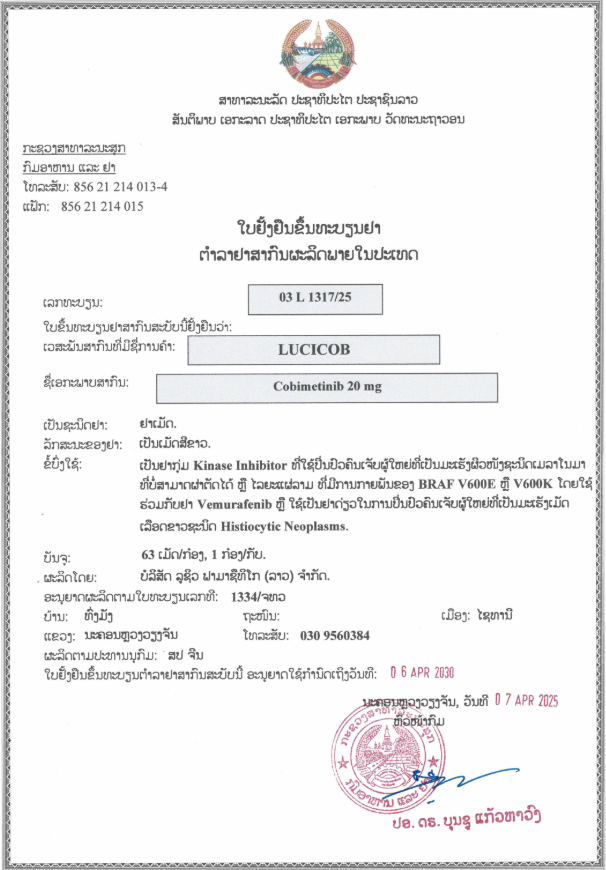
Drug Information Summary: Lucius Cobimetinib Tablets
Disclaimer: This is a synthesized summary based on the known pharmacological profile of Cobimetinib. This is not the official manufacturer's leaflet and does not replace professional medical advice.Cobimetinib is a potent prescription drug with serious risks and must only be prescribed and monitored by physicians experienced in the treatment of melanoma.
1. Brand and Generic Name
-
Generic Name: Cobimetinib
-
Brand/Manufacturer: Lucius Pharmaceuticals (Laos) - Note: This is a generic/manufactured version. The original brand name is Cotellic®.
2. What is Cobimetinib and what is it used for?
-
Cobimetinib is a kinase inhibitor. It works by blocking the activity of the MEK enzyme, which is part of a pathway that helps cancer cells grow.
-
It is used in combination with vemurafenib (a BRAF inhibitor) to treat patients with unresectable (cannot be removed by surgery) or metastatic (advanced) melanoma that has a specific genetic mutation: a BRAF V600E or V600K mutation.
-
Important: A diagnostic test is required to confirm the presence of a BRAF V600 mutation before starting treatment.
3. Before you take Lucius Cobimetinib
Do NOT take if you:
-
Are allergic to cobimetinib or any of its ingredients.
Warnings and Precautions:
Talk to your doctor about:
-
New Primary Malignancies (New Cancers): The combination therapy with vemurafenib may increase the risk of developing new cutaneous (skin) and non-cutaneous cancers, including squamous cell carcinoma (SCC) of the skin. Dermatologic evaluations should be performed before starting treatment, every two months during treatment, and for up to 6 months after discontinuation.
-
Hemorrhage (Bleeding): Can cause major bleeding events. Monitor for signs and symptoms of bleeding.
-
Cardiomyopathy: Can cause a decrease in heart function (reduced left ventricular ejection fraction). Your heart function should be assessed before starting treatment, one month after initiation, and then every 3 months during treatment.
-
Serous Retinopathy and Retinal Vein Occlusion: Can cause eye problems that may lead to blindness. Perform an ophthalmologic evaluation at regular intervals and for any visual disturbances.
-
Severe Skin Rashes: Rashes, including severe rash, can occur.
-
Hepatotoxicity: Can cause liver injury. Liver function tests should be monitored before initiation and during treatment.
-
Severe Photosensitivity: Increases sensitivity to sunlight. Severe sunburn can occur. Avoid sun exposure, use protective clothing, and apply broad-spectrum UVA/UVB sunscreen.
-
Rhabdomyolysis: May cause muscle damage, which can lead to kidney injury. Monitor creatine phosphokinase (CPK) and creatinine levels periodically.
-
Pregnancy and Breastfeeding: Based on animal data, cobimetinib can cause fetal harm.Effective contraception is required during treatment and for at least 2 weeks after the last dose. Do not breastfeed during treatment and for at least 2 weeks after the last dose.
4. How to take Lucius Cobimetinib
-
Dosage: The recommended dose is 60 mg (three 20 mg tablets) orally, once daily for the first 21 days of each 28-day cycle, followed by 7 days off.
-
Administration: Take with or without food.
-
Missed Dose: If you vomit after taking a dose or miss a dose, take the next dose at the scheduled time. Do not take an extra dose to make up for a missed dose.
-
Combination Therapy: Must be taken in combination with vemurafenib, which is taken twice daily. Follow your doctor's instructions for both medications exactly.
5. Possible Side Effects
Common side effects may include:
-
Diarrhea
-
Photosensitivity reaction
-
Nausea
-
Fever
-
Vomiting
-
Rash
-
Vision impairment
-
Increased liver enzymes
-
Serious Side Effects (Contact your doctor immediately):
-
Signs of a new skin cancer: new warts, sores that don't heal, or changes in a mole.
-
Signs of bleeding: unusual headaches, dizziness, coughing up blood, blood in stools.
-
Signs of heart problems: shortness of breath, swelling of ankles/feet, fatigue.
-
Signs of eye problems: blurred vision, loss of vision, other vision changes.
-
Signs of liver problems: yellowing of skin/eyes, dark urine, severe nausea.
-
Signs of muscle damage: unexplained muscle pain, tenderness, or weakness, especially with fever or dark urine.
-
Severe sunburn.
-
6. Drug Interactions
Inform your doctor about all medicines you are taking, especially:
-
Strong CYP3A Inhibitors (e.g., ketoconazole, itraconazole, clarithromycin): May increase cobimetinib levels and toxicity. Avoid concurrent use.
-
Strong CYP3A Inducers (e.g., rifampin, carbamazepine, St. John's Wort): May decrease cobimetinib levels and reduce effectiveness. Avoid concurrent use.
7. Storage
-
Store below 30°C (86°F).
-
Keep in the original container, tightly closed.
-
Protect from moisture.
-
Keep out of reach of children and pets.
8. Packaging
-
Typically supplied in blister packs or a bottle.
Final Crucial Advice:
Treatment with Cobimetinib (in combination with vemurafenib) requires extremely close monitoring for a wide range of potential serious side effects. Adherence to your doctor's instructions, scheduled dermatologic, cardiac, and ophthalmologic exams, and proactive reporting of any new symptoms are absolutely critical for safe and effective use. Always follow your oncologist's specific guidance.
WhatsApp:+852 61905607
WeChat:yindu7689